Retro Patterns Check Texture: Integrating Vintage Aesthetics Into Modern Digital Workflows
In the landscape of digital design and content creation, the distinction between a functional asset and a transformative one often lies in texture. While vector graphics and flat illustrations provide structure, they frequently lack the tactile depth that engages an audience on a subconscious level. This is where Retro Patterns Check Texture becomes an indispensable component of a professional creative workflow. These assets are not merely decorative; they serve as foundational layers that add grit, history, and visual weight to projects ranging from e-commerce product mockups to editorial layouts.
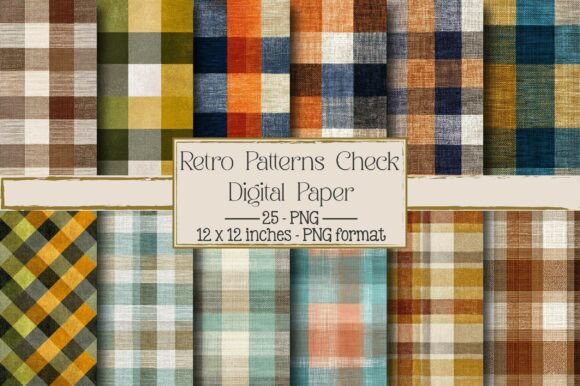
For professionals, entrepreneurs, and hobbyists alike, the ability to seamlessly integrate vintage aesthetics into contemporary designs allows for a unique brand voice. The specific offering described—25 PNG files featuring solid color distressed effects at 300 dpi with transparent backgrounds—represents a highly optimized resource for high-fidelity output. Understanding how to leverage these textures effectively requires more than just downloading a file; it demands an understanding of layering techniques, resolution management, and strategic application within broader project goals.
The Role of Distressed Textures in Visual Hierarchy
Before diving into the technical specifications of the Retro Patterns Check Texture pack, it is crucial to understand its function in design theory. A checkered pattern, particularly when rendered with a distressed or weathered effect, introduces irregularity. In a digital environment dominated by clean lines and perfect pixels, this irregularity creates visual interest. It breaks the monotony and guides the viewer’s eye across the composition.
When you apply a distressed check texture, you are essentially simulating physical imperfections. This psychological cue suggests authenticity and durability. For small business owners creating packaging or stickers, this implies quality and longevity. For bloggers and educators designing course materials, it suggests a hands-on, approachable learning experience. The texture acts as a bridge between the digital screen and the physical world, adding a layer of realism that flat colors cannot achieve alone.
Technical Specifications and Workflow Compatibility
The effectiveness of any digital asset is determined by its compatibility with standard industry tools. The Retro Patterns Check Texture files are provided in PNG format with a transparent background, which is the gold standard for non-destructive editing. This transparency allows designers to overlay the pattern onto any base color or image without worrying about white box artifacts or complex masking procedures during the initial upload phase.
Resolution and Print Readiness
At 12x12 inches and 300 dpi (dots per inch), these files are print-ready for a wide range of applications. This resolution ensures that when the texture is scaled down for social media thumbnails or scaled up for wall decor, the pixel density remains sufficient to prevent blurriness. For professionals working with printers, this means fewer revisions and lower production costs due to higher first-pass accuracy. However, users must remain mindful of their final canvas size. If you are designing for a large-format banner, you may need to tile the 12x12 inch pattern strategically to maintain clarity over larger areas.
Software Agnosticism
One of the primary advantages of this resource is its ease of use across different software environments. Whether you are using Adobe Photoshop for advanced compositing, Canva for rapid marketing material creation, or Procreate for hand-drawn illustration enhancements, the PNG format integrates smoothly. The "easy to resize" nature of these vectors-raster hybrids allows freelancers and marketers to adapt the aesthetic quickly to fit various aspect ratios without losing the integrity of the distressed effect.
Practical Implementation Across Industries
To maximize the value of the Retro Patterns Check Texture, consider how it fits into specific workflows across different sectors. Here is how these assets can be utilized in practical scenarios:
- E-Commerce and Product Design: For entrepreneurs selling physical goods, such as t-shirts or stickers, these textures are essential for creating realistic mockups. By placing a product image on top of a distressed check background, you simulate how the item might look in a real-world setting, such as a worn journal or a vintage tote bag. This increases conversion rates by helping customers visualize the product's context.
- Print-on-Demand Services: When uploading designs to platforms like Redbubble or Etsy, using these textures can help your listings stand out in crowded marketplaces. The solid color distressed effect allows for easy color customization. You can change the underlying hue of the pattern to match seasonal trends or brand palettes while retaining the nostalgic texture.
- Content Creation and Blogging: Educators and bloggers can use these patterns to create visually engaging headers, dividers, or background elements for downloadable PDFs and worksheets. The transparency allows the text to remain legible while the texture adds a subtle backdrop that prevents the page from looking sterile.
- Social Media Marketing: Marketers can utilize these 25 distinct designs to create a cohesive visual theme for Instagram grids or Pinterest boards. Consistency in texture, even if the colors change, builds brand recognition. The distressed look aligns well with current trends favoring "lo-fi" or authentic aesthetics over polished, corporate imagery.
Best Practices for Integration and Quality Control
Integrating Retro Patterns Check Texture into your projects requires attention to detail to ensure the final output meets professional standards. Here are several operational tips to enhance your workflow:
- Color Calibration Awareness: As noted in the product details, colors may vary depending on devices and printers. Before committing to a full production run for physical products, always perform a test print. On-screen RGB values do not always translate perfectly to physical CMYK ink. Adjusting the opacity of the texture layer can also help mitigate harsh contrasts that might not reproduce well.
- Layer Blending Modes: To achieve the most natural distressed look, experiment with blending modes such as "Multiply," "Overlay," or "Soft Light." These modes allow the texture to interact with the underlying colors dynamically, rather than simply sitting on top of them. This technique is particularly useful for creating grunge effects on photographs or adding depth to flat vector logos.
- Strategic Tiling: While the files are high-resolution, repeating a single 12x12 inch pattern too many times can reveal the repetition seam. Use the transparency feature to crop the edges slightly or vary the scale of multiple instances of the pattern to break up the grid. This is especially important for large-scale wall decor or website backgrounds.
- Organization and Asset Management: With 25 distinct designs, keeping track of variations can become challenging. Create a dedicated folder structure in your project management tool or local drive labeled by color or intensity. Tagging these assets with keywords like "vintage," "grunge," "checkered," and "distressed" will streamline future searches, saving time during fast-paced production cycles.
Long-Term Value and Versatility
The decision to incorporate Retro Patterns Check Texture into your digital toolkit is an investment in versatility. Unlike temporary filters or preset styles that may go out of fashion, the classic checkered pattern paired with a distressed finish has enduring appeal. It taps into a timeless aesthetic that resonates across generations, making it suitable for both retro-themed projects and modern minimalist designs that require a touch of edge.
Furthermore, because these are instant download digital assets, there is no inventory risk or shipping delay. They are available immediately upon purchase, allowing for agile response to client requests or trending topics. For solopreneurs and small teams, this immediacy is critical. It enables rapid prototyping and iteration, key components of an efficient creative process.
Ultimately, the goal of using these textures is not to overwhelm the viewer but to enhance the narrative of the design. Whether you are crafting a sticker for a niche community, designing a frame artwork for a home decor store, or preparing a scrapbook layout, the Retro Patterns Check Texture provides the structural integrity and stylistic nuance needed to elevate simple compositions into compelling visual stories. By treating these assets as integral parts of your design system rather than afterthoughts, you ensure consistency, quality, and professionalism in every project you undertake.
As you begin to experiment with these 25 designs, remember that the best results come from thoughtful application. Test different opacities, blend them with photographic elements, and observe how the distressed edges interact with sharp typography. Through this iterative process, you will discover how these textures can transform ordinary digital files into objects that feel tangible, experienced, and authentically crafted.