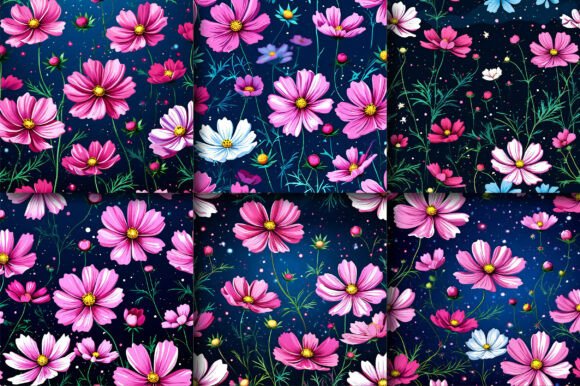
Evaluating Cosmos Flowers Patterns for Natural and Serene Design Projects
In the landscape of contemporary design, particularly within sectors that prioritize organic aesthetics and tranquility, Cosmos Flowers Patterns have emerged as a distinct visual language. This specific floral motif is characterized by its delicate, star-shaped blooms, which offer a unique blend of wild natural beauty and refined elegance. For designers, crafters, and brand strategists aged 20 to 50 who are constantly evaluating visual resources, understanding the specific applications and limitations of this pattern is crucial. It is not merely a decorative element; it is a strategic choice that influences the perceived tone of a project, signaling gentleness, simplicity, and a connection to nature.
The appeal of Cosmos Flowers Patterns lies in their structural simplicity and botanical accuracy. Unlike dense, baroque-style florals or abstract geometric interpretations, the cosmos flower presents an open, airy silhouette. This makes it particularly effective for designs that require breathing room—negative space that allows the viewer’s eye to rest. When integrated into stationery, branding, or home décor, these patterns do not overwhelm; they complement. They serve as a subtle accent that adds texture and interest without dominating the composition. This characteristic makes them a versatile tool for professionals seeking to create serene and gentle designs suitable for spring and summer themes.
Defining the Aesthetic: What Makes Cosmos Distinct?
To understand why one might choose Cosmos Flowers Patterns over other floral options, it is necessary to analyze the specific visual attributes of the flower itself. The cosmos plant, native to Mexico but widely cultivated globally, features thin, feathery foliage and daisy-like flowers with prominent centers. In pattern design, this translates to a lightweight, fragmented look. The "star-shaped" description often refers to the radial symmetry of the petals, which creates a sense of balance and harmony.
This distinctiveness sets it apart from heavier blooms like peonies or roses, which convey luxury, romance, or opulence. It also differs from minimalist line art, which can feel cold or industrial. The cosmos occupies a middle ground: it is recognizable as a flower, yet stylized enough to function seamlessly as a repeating pattern. This balance is what makes it ideal for natural-themed branding. Brands aiming to communicate authenticity, eco-friendliness, or calmness will find that the inherent wildness of the cosmos aligns perfectly with those values. The pattern suggests growth and natural order without appearing manicured or artificial.
Comparative Analysis: Cosmos vs. Other Floral Approaches
When researching design assets, professionals often compare different floral styles to determine the best fit for their audience. Here is how Cosmos Flowers Patterns stacks up against common alternatives in terms of application, visual weight, and emotional resonance.
Versus Dense Botanical Illustrations
Dense botanical illustrations often feature overlapping leaves, multiple flower types, and rich color palettes. These are excellent for creating a sense of abundance or vintage charm. However, they can be visually busy and difficult to integrate into modern, clean layouts. In contrast, Cosmos Flowers Patterns typically utilize more negative space. This makes them superior for digital interfaces, mobile app backgrounds, or packaging where legibility of text is paramount. If a project requires a background that does not compete with primary content, the lighter structure of the cosmos pattern is the more practical choice.
Versus Abstract Geometric Florals
Abstract geometric florals reduce flowers to shapes and lines, offering maximum flexibility and modernity. While highly adaptable, they may lack the immediate emotional connection that a realistic or semi-realistic depiction provides. The cosmos pattern retains enough botanical detail to trigger an association with nature and spring. For brands that want to emphasize their connection to the earth or agriculture, the slight realism of the cosmos is more effective than pure abstraction. It bridges the gap between artistic interpretation and natural representation.
Versus Watercolor Washes
Watercolor washes provide soft, ethereal backgrounds but often lack defined structure. They can appear vague or unfinished if not paired with strong typography. Cosmos Flowers Patterns, especially when rendered in vector formats or crisp line art, provide clear focal points. They anchor a design while maintaining a soft aesthetic. This makes them particularly useful for scrapbooking and card making, where distinct elements need to be cut out or layered.
Strategic Use Cases and Applications
Understanding where Cosmos Flowers Patterns fits best requires looking at specific industry applications. The versatility of this pattern allows it to span multiple creative domains, each leveraging different aspects of its aesthetic.
- Stationery and Paper Goods: The gentle form of the cosmos is ideal for wedding invitations, thank-you cards, and journal covers. The pattern evokes a sense of celebration and peace, making it a top choice for spring weddings or baby showers. Its simplicity ensures that handwritten notes or elegant calligraphy remain the focal point.
- Natural-Themed Branding: For small businesses in the wellness, skincare, or organic food sectors, consistent visual identity is key. Using Cosmos Flowers Patterns on packaging, labels, or website headers reinforces a brand promise of purity and natural ingredients. The pattern can be scaled easily, working equally well on a large storefront window decal or a tiny product label.
- Scrapbooking and Mixed Media: Crafters value patterns that are easy to work with. The distinct shape of the cosmos flower allows for easy cutting and layering. Whether used as a digital overlay in photo editing software or as a physical print for paper crafting, the pattern adds a touch of wild beauty without requiring complex coloring techniques.
- Pieceful Home Décor: In interior design, textiles printed with cosmos patterns bring an outdoor feel indoors. Curtains, throw pillows, and table linens featuring this motif can soften a room’s atmosphere. Because the pattern is not overly loud, it pairs well with neutral color palettes, allowing the natural greens and whites (or soft pinks and purples) of the flowers to stand out subtly.
Evaluating Tradeoffs and Limitations
No design resource is universally perfect. When considering Cosmos Flowers Patterns, it is important to recognize potential limitations to ensure they align with your project goals.
Seasonal Association: The cosmos flower is strongly linked to late summer and early autumn in many regions, though it blooms in spring as well. Depending on the color palette chosen, the pattern may feel less appropriate for winter projects unless paired with cool tones like silvers and icy blues. Designers must consider the seasonal context of their project to avoid mismatched vibes.
Perceived Simplicity: While simplicity is a strength, it can sometimes be mistaken for a lack of sophistication. In high-end luxury markets that favor intricate, detailed, or gold-embossed designs, the casual, wild nature of the cosmos might feel too informal. It is better suited for approachable, friendly, or rustic-elegant brands rather than ultra-luxury or corporate entities.
Repetition Challenges: Like all seamless patterns, the quality of the Cosmos Flowers Patterns depends heavily on the tiling algorithm. Poorly constructed repeats can create obvious grid lines or awkward spacing between flowers. When sourcing or creating these patterns, it is essential to inspect the seams closely. High-quality implementations will make the repetition invisible, enhancing the illusion of a field of flowers rather than a tiled surface.
Decision Factors: When to Choose Cosmos
Selecting the right visual asset is a decision based on alignment with core objectives. Cosmos Flowers Patterns are the right choice when:
- Serenity is the Goal: If the project aims to reduce visual noise and promote calm, the open structure of the cosmos is superior to denser alternatives.
- Natural Authenticity is Key: For brands that want to highlight natural origins, the recognizable botanical form of the cosmos builds trust and relatability.
- Versatility is Required: If the same pattern needs to work across various mediums—from web banners to fabric prints—the scalable and simple nature of the cosmos design offers practical advantages.
- A Refined Aesthetic is Desired: The pattern adds elegance without ostentation. It is perfect for projects that need to feel polished but not pretentious.
Conversely, readers may need another option if their project demands bold impact, heavy ornamentation, or a strictly modernist, non-representational style. In such cases, geometric abstractions or bold graphic florals would be more appropriate.
Conclusion for the Creative Professional
The evaluation of Cosmos Flowers Patterns reveals a resource that is both aesthetically pleasing and functionally versatile. Its ability to convey wild, natural beauty while maintaining a refined and gentle form makes it a valuable addition to any designer’s toolkit. By understanding its strengths in serenity and authenticity, as well as its limitations regarding seasonality and luxury positioning, professionals can make informed decisions that enhance their creative output. Whether used for spring stationery, natural branding, or peaceful home décor, this pattern offers a timeless solution for those seeking to infuse their work with the quiet elegance of nature.